Skip to content

    Helper & custom knowledge

    Helper explains grammar and usage.

    Unpack Russian cases and German endings in your language. Save your preferred explanations once and reuse them with the next sentence.

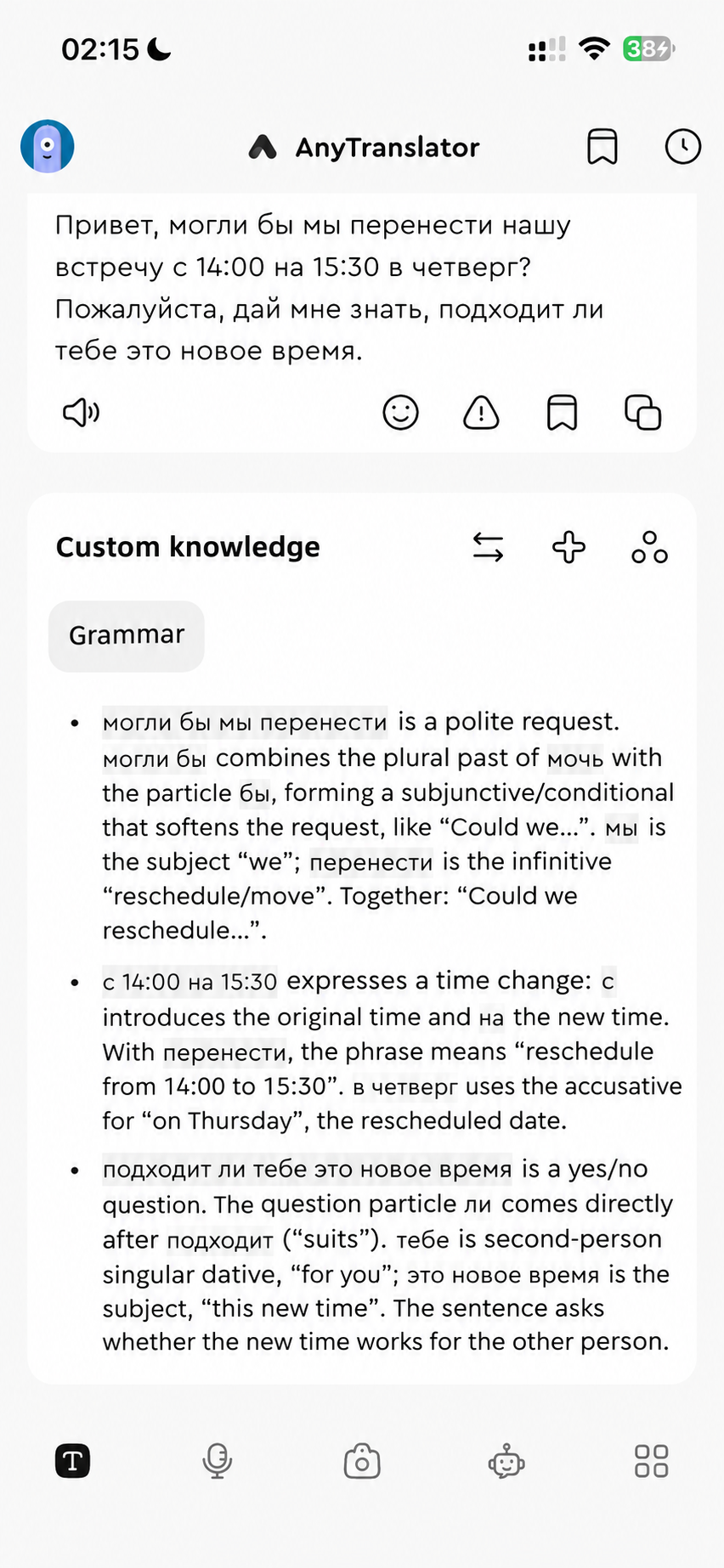
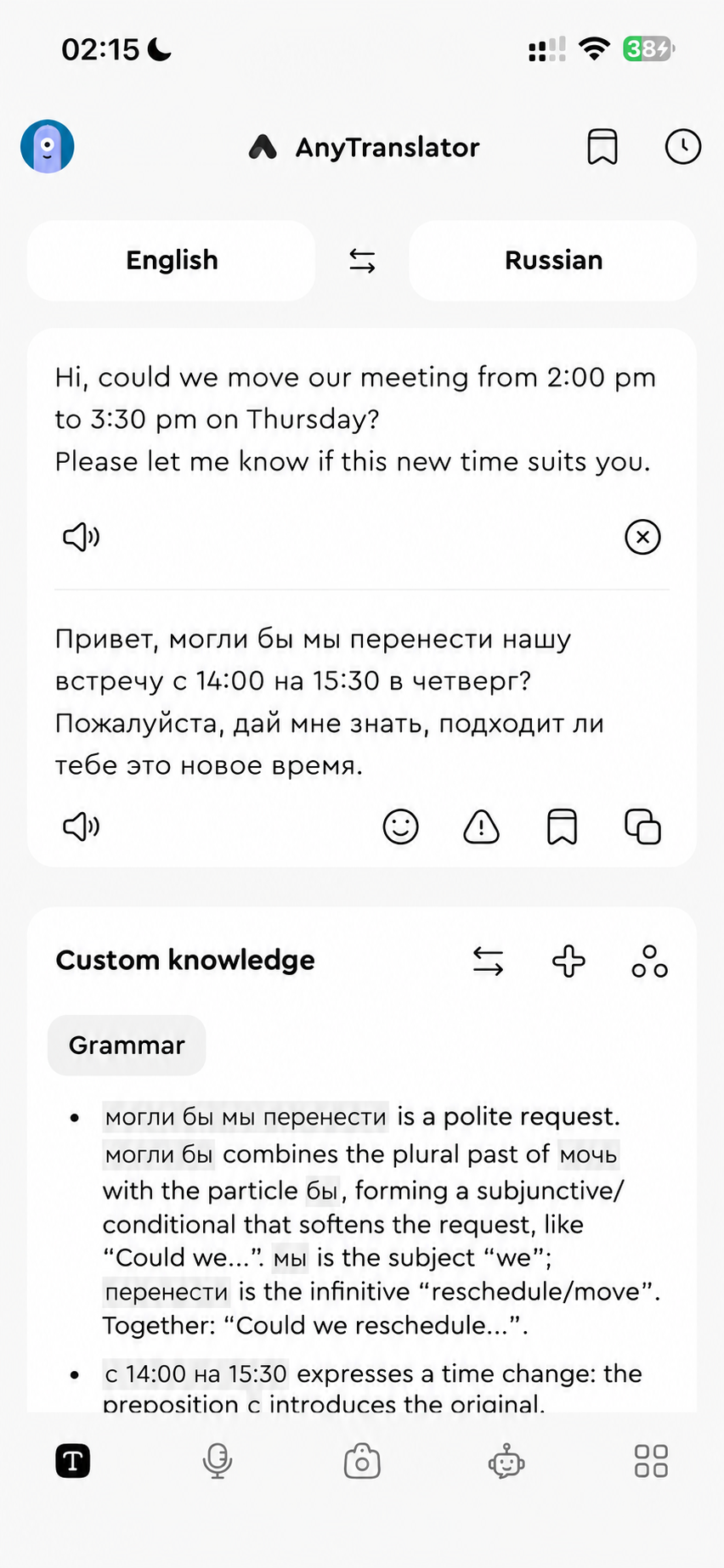
    Helper grammar explanation: Russian conditional phrasing, times and cases in a work rescheduling message, explained in English.

    Helper & custom knowledge

    Understand the phrase—and how to use it.

    Break down cases, endings and sentence patterns in source text and translations. Choose grammar, common mistakes or word-by-word analysis, then save instructions for your field, goals and preferred level of detail.

    1. 01Grammar, common mistakes and word-by-word analysis show how sentences fit together.
    2. 02Go further with synonyms, examples, implied meaning and suggested replies.
    3. 03Save instructions for your field, goals and explanation depth, then reuse them.
    Download

    Why Russian and German endings change

    Illustrative examples: see how cases, articles and noun endings work together, from Russian instrumental to German dative.

    • Russian: Я говорю с мой друг. → Я говорю с моим другом. For “with”, с takes the instrumental case, so both мой and друг change endings.
    • German: Ich spreche mit der Kunde. → Ich spreche mit dem Kunden. mit takes the dative; the weak noun Kunde becomes Kunden.
    Save your instructions. Reuse them with new sentences.

    Save instructions such as “Explain Russian cases in my language” or “Explain German endings”. Keep the explanation style you like and focus on what you want to learn.

    Related features

    Your next conversation starts here.

    Free to download. Pro available in the app.